The Saturday ritual of the trestle market
Reference library · 1075 words
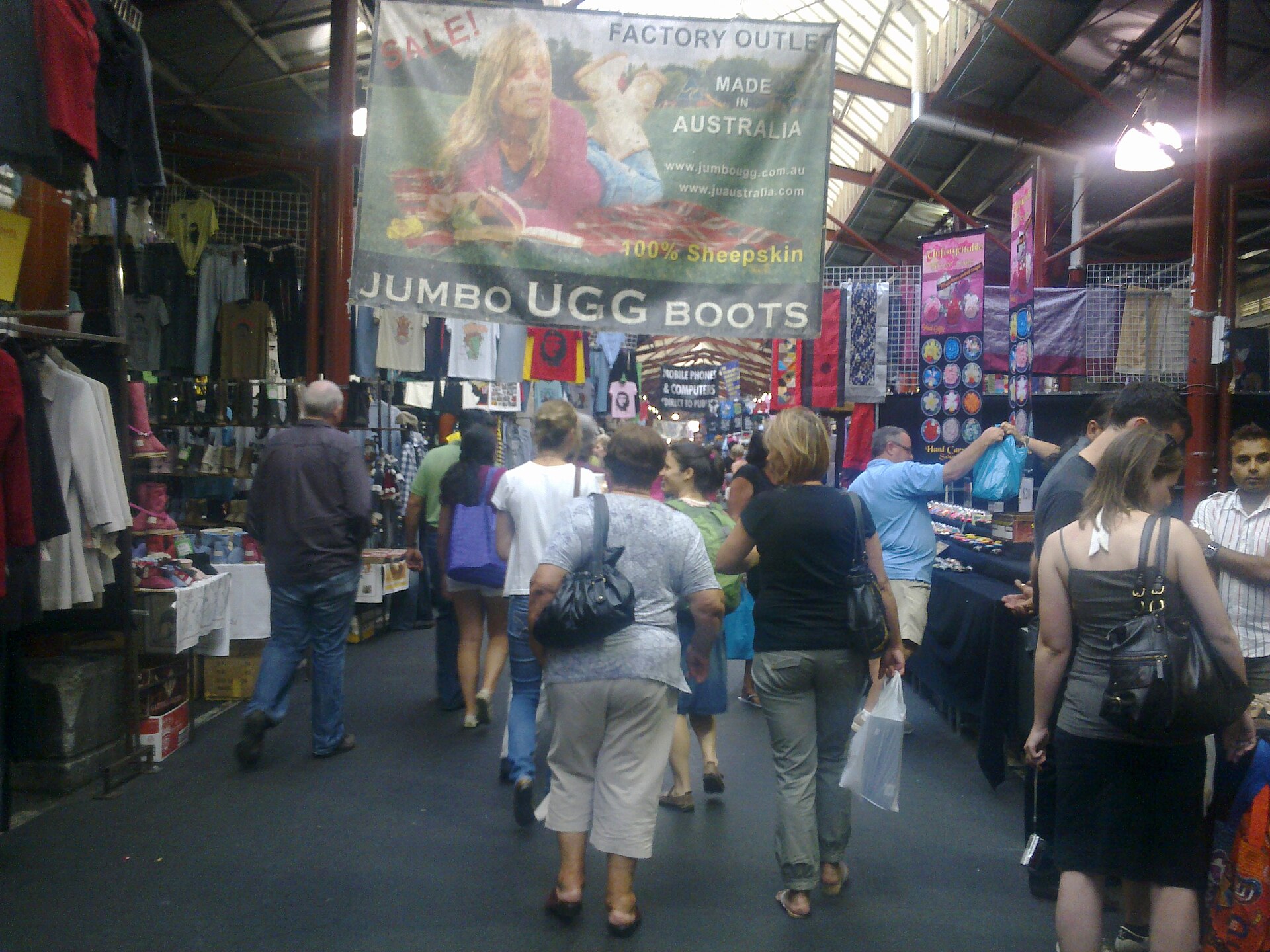

On a Saturday morning in Melbourne, in a schoolyard in Coburg, a park in Albert Park, a church car park in Kew or a paddock beside the river at Abbotsford, the same object appears in rows: a folding trestle table, a canvas gazebo, a chalkboard, a set of scales and a float in a tin. The trestle market is not a tourist institution and mostly not a permanent building. It is a recurring temporary occupation of public ground, and it has become one of the more reliable ways the city organises its weekends. Understanding why it took hold here, and how it differs from the great Victorian era market halls, tells you a lot about how Melbourne eats and how it uses land.
The distinction to make first is between the market house and the trestle market. Melbourne inherited three surviving nineteenth century public markets, all built as municipal infrastructure. South Melbourne Market opened in 1867 in what was then Emerald Hill and is the oldest still running. Prahran Market began in 1864 on Greville Street and moved to Commercial Road in 1881, the present building dating from 1891. Queen Victoria Market grew from sheds erected in 1878 on land that included part of the old Melbourne general cemetery, a fact that has shadowed every redevelopment proposal since. These are councils' markets, with fixed stalls, cool rooms, leases and rent. The trestle market is their opposite: no building, no lease, a permit for a morning, and a stallholder who drives in at dawn and is gone by two.
Where the modern form came from
The contemporary farmers market arrived in Victoria in the late 1990s, considerably later than in North America and Europe, and it grew fast. The driver was not nostalgia. It was a squeeze on farm gate returns: supermarket concentration in Australia is unusually high, and for a small grower a direct sale on a Saturday morning returns a multiple of what a wholesaler pays. For a producer of something the supermarket system handles badly, such as a heritage apple variety, raw milk cheese, small batch olive oil or an animal breed raised in numbers too low to interest a processor, a trestle table in an inner suburb is not a hobby, it is the business model.
Because the format was easy to imitate, it was also easy to fake, and Victoria developed an accreditation scheme in response. Accredited farmers markets require that the person behind the table has actually grown, raised or made what is on it, and they audit for it. That is the distinction hiding behind the signage. A genuine producers market has farmers who can tell you what the frost did in September. A general market has resellers buying at the wholesale market and marking up. Both are perfectly legitimate ways to spend a Saturday, but they are not the same thing, and the price you are paying only makes sense if you know which one you are standing in.
The other lineage is the craft and community market, which in Melbourne runs back through the school fete, the church hall stall and the counterculture markets of the 1970s. Rose Street Artists' Market in Fitzroy, tucked into a lane off Brunswick Street, is the best known of the makers markets and helped set the template of the inner north weekend: ceramics, prints, jewellery, coffee at the gate. The Esplanade market on the rise above the St Kilda foreshore has run for decades in a place where the seaside crowd has always been the customer base. Camberwell's Sunday market, in the car park behind the station, is the city's great second hand institution, and is closer in spirit to a boot sale than to anything agricultural.
The economics of a trestle
The stall is a small business with a brutal cost structure, and once you see it you cannot unsee it. The stallholder pays a site fee for the morning whether or not it rains. They have driven from somewhere in Gippsland, the Goulburn Valley, the Mornington Peninsula or the Macedon Ranges, often leaving at three in the morning, and the fuel is not recoverable. Everything perishable that does not sell either goes home, goes to a food rescue organisation or goes in the bin. The whole day's takings pass through one card reader that depends on mobile reception in a park.
That is why the choreography looks the way it does. Prices are round numbers, because change slows the queue. Produce is stacked high and forward at nine and consolidated into a smaller, tidier display by noon, so the table never looks depleted. Discounting starts in the last hour, since a box sold at cost beats a box driven home. Samples exist because the conversion rate on a tasted cheese is very high. And the good stallholders remember faces, because a market's revenue is built on the same forty households returning weekly rather than on passing trade.
How to use one properly
The practical advice is unglamorous. Arrive early if you want the scarce thing and late if you want the cheap thing, and accept that you cannot have both. Bring cash as a fallback and bring your own bags, because Victoria's ban on lightweight plastic shopping bags means nobody is going to solve that problem for you. Walk the whole market before buying anything, since inner Melbourne markets frequently have two or three growers selling the same crop at meaningfully different prices and quality. Ask where it was grown, and notice whether the answer is a place or a vague region, because that single question separates the grower from the reseller faster than any sign does.
Above all, adjust your expectations to the season. A genuine producers market in Melbourne in July offers brassicas, citrus, root vegetables, apples and pears out of cool store, and very little else. That scarcity is the point rather than a failure: it is the honest consequence of buying from people who farm within a few hours of the city. The supermarket four blocks away will sell you a tomato in winter, flown or grown under glass, and it will be worse. The trestle market's whole proposition is that you accept a narrower choice in exchange for knowing exactly whose hands were on it, and that bargain, repeated every Saturday morning across a hundred inner and middle suburbs, is why the folding table has outlasted every prediction that it was a passing fashion.
References
- eMelbourne, The Encyclopedia of Melbourne Online, University of MelbourneQueen Victoria Market
- eMelbourne, The Encyclopedia of Melbourne Online, University of MelbournePrahran Market
- South Melbourne MarketHistory
- Queen Victoria MarketMarket History
This is a reference article, written from the sources above. It is background, not news reporting.