Ordering coffee like you've done it a thousand times
Reference library · 991 words
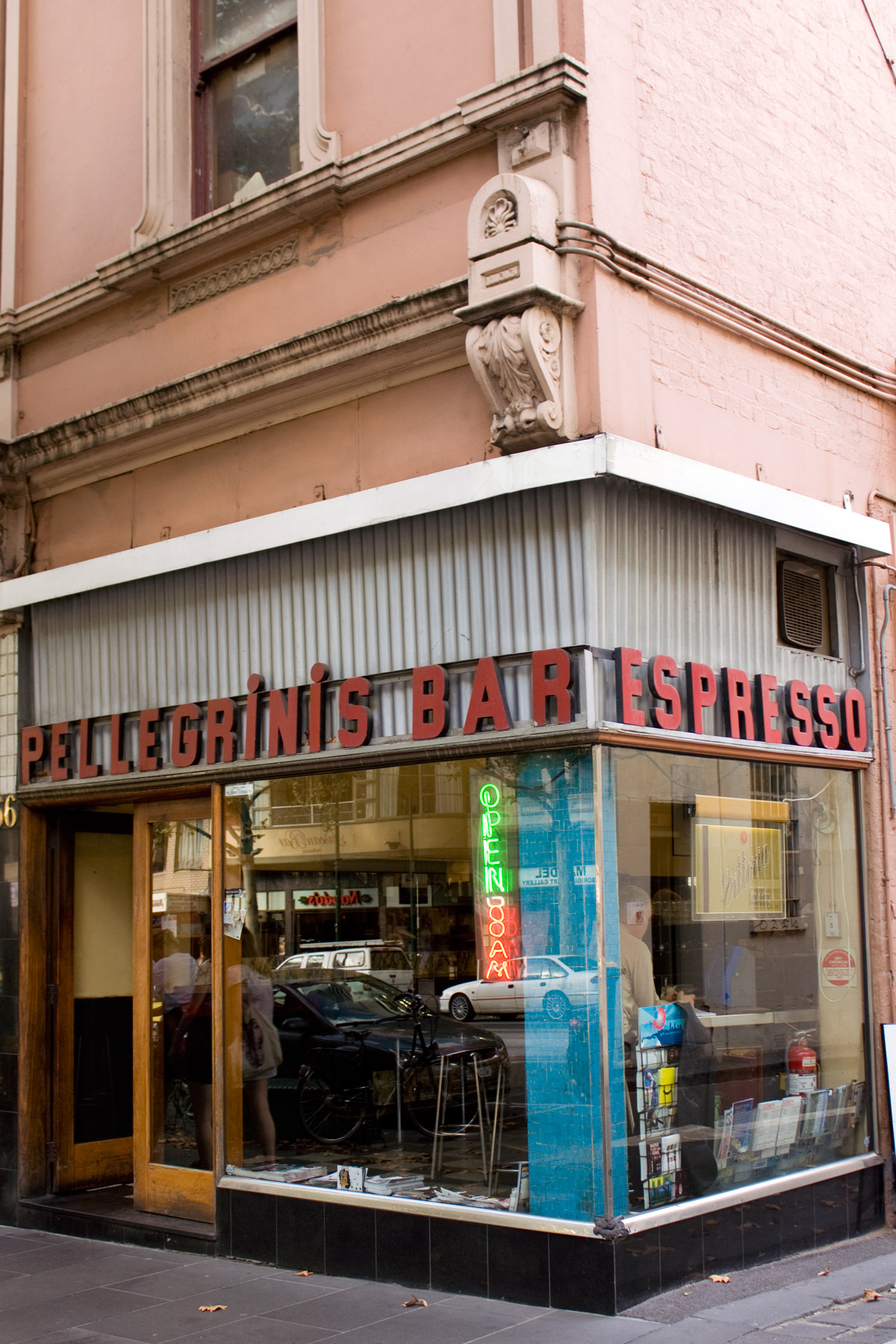
.jpg)
Ordering coffee in Melbourne is not difficult, but it is specific, and the specificity trips up visitors more than the drinks themselves do. The main thing to understand is that you do not choose a size and then a drink. You choose a drink, and the drink determines the size. Asking for a large cappuccino in an independent cafe will get you a slightly puzzled look and then, usually, a large cappuccino, because staff here are far less precious than their reputation suggests.
The working vocabulary is short. A flat white is espresso with steamed milk and a thin layer of microfoam, served in a ceramic cup of around 160 to 200 millilitres. A latte is the same drink in a glass, generally with a little more milk and slightly more foam. A cappuccino has a thicker foam cap and usually a dusting of chocolate. A long black is espresso poured over hot water, which keeps the crema; an Americano, water poured over espresso, is not the local default and some places will not make one. A short black is a single or double espresso on its own. A macchiato is espresso marked with a small amount of milk, and you may be asked whether you want it short, in a small glass, or long, in a taller one with more water and milk. A piccolo is a small milk coffee in a shot glass, essentially a miniature latte.
Then there is the magic, which is a Melbourne coinage and still faintly contested elsewhere in the country: a double ristretto in a small cup, around 150 millilitres, topped with steamed milk. It exists because a lot of people wanted a stronger, smaller, less milky flat white and there was no word for it. If a cafe does not offer it, ordering a strong piccolo gets you close.
The three corrections that matter
First, Melbourne did not invent espresso, and no serious account claims otherwise, though the impression is widespread. Espresso was invented in Milan, where Luigi Bezzera patented a machine in 1901, and the lever machine that produces the crema on a modern shot was developed in Italy by Achille Gaggia after the Second World War. New York had a machine in the late 1920s. Melbourne had a few by the 1930s, but they were confined to restaurant kitchens, at Florentino for example, and to small Italian grocers. They were not part of any public ritual.
The public espresso bar dates to 1953, when a Melbourne father and son secured Australian rights to manufacture Gaggia machines and opened a bar called Il Capuccino in St Kilda. Machines spread from there to the University Cafe on Lygon Street in Carlton and to Pellegrini's on Bourke Street, both of which are still trading. Melbourne's first kerbside cafe, with tables on the footpath, opened at the Oriental on Collins Street in 1958. The founding generation of the city's coffee culture were Italian and Greek migrants running businesses that were, first of all, places to speak your own language in public.
Second, the flat white. Australia and New Zealand both claim it, both claims date from around the 1980s, and no documentary evidence settles the question. Anyone who tells you confidently that it was invented in a particular cafe on a particular date is repeating a story rather than a record. What is true is that the drink is a Southern Hemisphere invention that spread outwards, and that its arrival on menus in London and New York in the 2010s was widely and correctly reported as an Australasian import.
Third, the barista is not judging you. The idea that Melbourne coffee ordering is an etiquette minefield is largely a self flattering story the city tells about itself. Ask for two sugars. Ask for it extra hot if you want it extra hot; you will get a slightly worse coffee and nobody will say anything. The genuine local convention is only that milk alternatives are named up front, that oat is the default alternative in most places, and that a keep cup usually earns a small discount.
Why the standard is so even
The interesting thing about Melbourne coffee is not the peak but the floor. The best cafes here are comparable to the best anywhere. What is unusual is the median: a coffee bought in a suburban shopping strip, from a place with no design ambitions and no roastery of its own, is generally competent. Visitors from cities with famous coffee scenes tend to remark on this rather than on the high end.
Several things produced it. Espresso became the default rather than a specialty, so there is no separate category of serious coffee shop; there is just coffee. Independent roasters supply large numbers of small cafes, which means quality control sits with people who taste the product. Cafes are numerous enough that a bad one loses trade quickly. And the market has been running long enough that baristas move between businesses and carry technique with them.
The deeper history is longer than the espresso machine. Street coffee stalls served city workers cheap breakfasts and late night refreshment in the 1850s. By the late 1930s Melbourne had around 450 registered cafes, roughly two hundred of them serving coffee or tea, mostly percolated. And in the 1880s the city built over fifty coffee palaces, vast temperance hotels intended to offer everything a pub offered except the drink. The Federal Coffee Palace of 1888 had four hundred bedrooms. Nearly all of them eventually took liquor licences, which rather makes the point about how the experiment went, but the buildings show that Melbourne has been organising public life around coffee for a very long time.
So order plainly. A flat white, or a long black, or a magic if you want the local shibboleth. Pay at the counter for takeaway and at the end for table service, unless there is a sign saying otherwise. Nobody is keeping score.
References
- eMelbourne, The Encyclopedia of Melbourne OnlineCoffee
- eMelbourne, The Encyclopedia of Melbourne OnlineRestaurants and Cafes
- eMelbourne, The Encyclopedia of Melbourne OnlineCoffee Palaces
- eMelbourne, The Encyclopedia of Melbourne OnlineEthnic Diversity
This is a reference article, written from the sources above. It is background, not news reporting.