Footy as the city's unofficial religion
Reference library · 1096 words
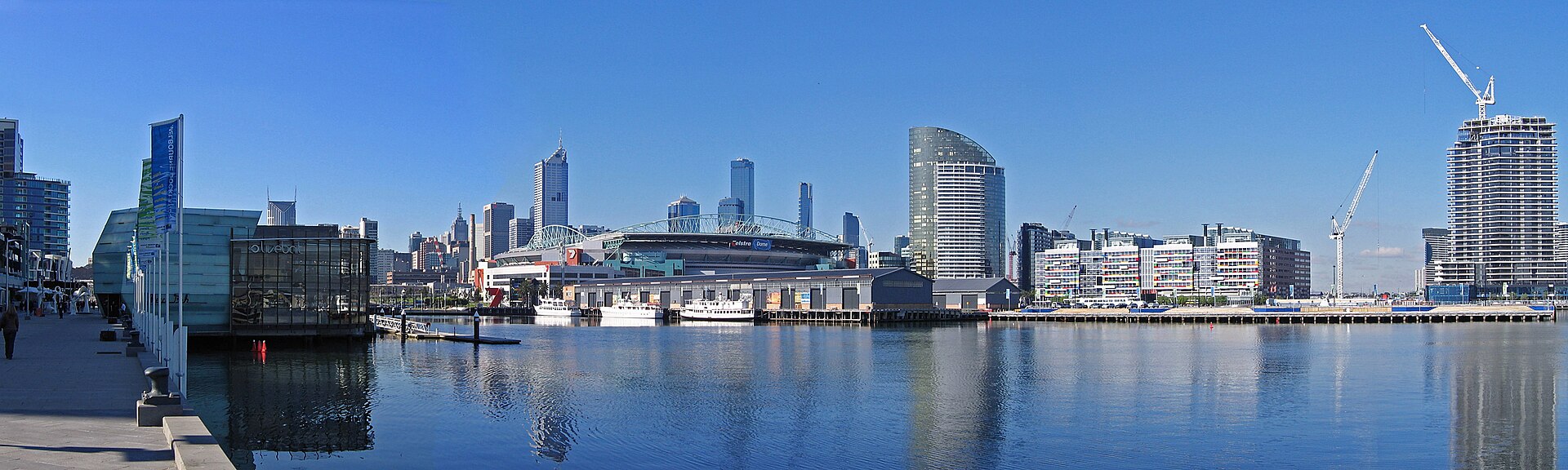

The comparison is overused but hard to avoid. In Melbourne, Australian rules football supplies most of what an established religion supplies: a calendar, a set of inherited allegiances you did not choose, a weekly gathering at a very large building, robes in club colours, an oral tradition of grievance and miracle, and a genuine capacity to structure people's emotional lives from March to September. What makes it worth examining rather than simply repeating is that the game was invented here, in this city, and its institutions still map onto the suburbs with a precision no other Australian sport can match.
The founding sequence is documented. In July 1858 Tom Wills, a cricketer recently returned from schooling in England, wrote to a Melbourne sporting paper proposing that cricketers form a football club to keep fit through winter. A match between Scotch College and Melbourne Grammar was played in August of that year in the parkland beside the Melbourne Cricket Ground. In May 1859 a small group met at a hotel in East Melbourne and drew up a set of rules for the Melbourne Football Club. Those rules are the oldest surviving code of football laws still in continuous use, which makes Australian football older as a codified game than association football or rugby union.
The origin story that circulates most widely is more contested. It is often claimed that Wills, who grew up in the Western District of Victoria among Djab Wurrung people and spoke some of the language, drew on marngrook, an Aboriginal ball game involving high kicking and leaping for a possum skin ball. The claim is plausible on the face of it and it is taken seriously by some historians and by the AFL itself in its Indigenous round observances. But there is no contemporary documentary evidence that Wills said so, no reference to marngrook in the 1859 rules or in the surrounding correspondence, and other historians regard the connection as unproven and, in its stronger versions, as a retrospective national myth. Both the possibility and the absence of evidence deserve to be stated plainly rather than resolved for the convenience of a nicer story.
Suburbs, and what happened to them
The competition that became the AFL grew out of the Victorian Football Association, formed in 1877, from which eight clubs broke away in the 1890s to found the Victorian Football League. Its first season was played in 1897 by Carlton, Collingwood, Essendon, Fitzroy, Geelong, Melbourne, South Melbourne and St Kilda. Every name on that list except Geelong is an inner suburb, and for most of the twentieth century clubs actually played there: Collingwood at Victoria Park, Essendon at Windy Hill, Carlton at Princes Park, Hawthorn at Glenferrie Oval, Footscray at the Western Oval, St Kilda at the Junction Oval, North Melbourne at Arden Street. A ground was a five minute walk from a factory gate, and the club was a genuinely local institution with a social club, a bar and a committee full of local businessmen.
That world ended between roughly 1980 and 2000, and the ending was economic rather than sentimental. Television money, a national competition and the demand for large modern venues made small suburban grounds unviable. South Melbourne was relocated to Sydney in 1982 and became the Swans. Fitzroy, the smallest and poorest of the foundation clubs, was merged into the Brisbane Bears in 1996 in circumstances its supporters have never accepted. The league renamed itself the Australian Football League in 1990. Today almost all Melbourne matches are played at two venues, the Melbourne Cricket Ground and the stadium at Docklands opened in 2000, with Geelong at Kardinia Park the only Victorian club still playing home games on its own historic ground.
What survived the consolidation is the allegiance itself, which remains stubbornly geographic even when the geography no longer means anything. A Collingwood supporter in Point Cook is expressing an inherited attachment to a suburb they may never have lived in. That transferability is precisely why the tribal structure outlived the grounds.
The MCG and the calendar
The Melbourne Cricket Ground sits in Yarra Park on Wurundjeri Woi Wurrung country, an area that was a camping and meeting place before the ground was established there in the 1850s. It is the largest stadium in Australia, holds close to a hundred thousand people, and has hosted the Grand Final almost every year since the early twentieth century. Its scale is hard to convey in print: a good home and away match there can draw a crowd larger than the population of many Victorian regional cities.
The calendar it anchors is the real evidence of the religion claim. The season opens in March, and the last Saturday in September has traditionally held the Grand Final, though scheduling has pushed it later in some years. Since 2015 Victoria has had a public holiday on the Friday before it, a decision that was criticised as an economic indulgence and has nonetheless proved politically untouchable. Anzac Day brings a fixed Collingwood and Essendon match at the MCG. Queen's Birthday and Easter carry their own fixtures. The Brownlow Medal count on the Monday of Grand Final week is broadcast live and watched by people with no interest in the result.
Where the story is not universal
Scepticism is warranted about the totality of the claim. Melbourne is one of the most culturally diverse cities in the world, and for a great many residents football is background noise rather than faith. The postwar migrations that reshaped the city built their own sporting institutions, particularly in soccer, where clubs founded by Greek, Croatian, Italian, Macedonian and Maltese communities carried social meaning at least as heavy as any football club's, and were later pressured to strip their ethnic identifiers from their names in order to fit a national competition. Cricket occupies the summer with equal seriousness. Netball has a participation base that dwarfs elite football.
The most obvious limit is more recent. Women were excluded from playing the game at any elite level for its entire first century and a half, despite a long history of women's matches at local level, and a national women's competition began only in 2017. Its rapid growth since suggests the demand had been there all along and was simply not served. A religion that excluded half the congregation from the altar until the twenty first century is worth describing accurately, and the accurate description is that football in Melbourne is a powerful, genuinely popular civic institution which has spent much of its history being narrower than the city it claims to represent.
References
- eMelbourne, The Encyclopedia of Melbourne Online, University of MelbourneFootball, Australian Rules
- eMelbourne, The Encyclopedia of Melbourne Online, University of MelbourneSporting Culture
- Melbourne Cricket GroundMelbourne Cricket Ground
- WikipediaMarngrook
- WikipediaTom Wills
This is a reference article, written from the sources above. It is background, not news reporting.