Cricket summers and the rhythm they set
Reference library · 1072 words
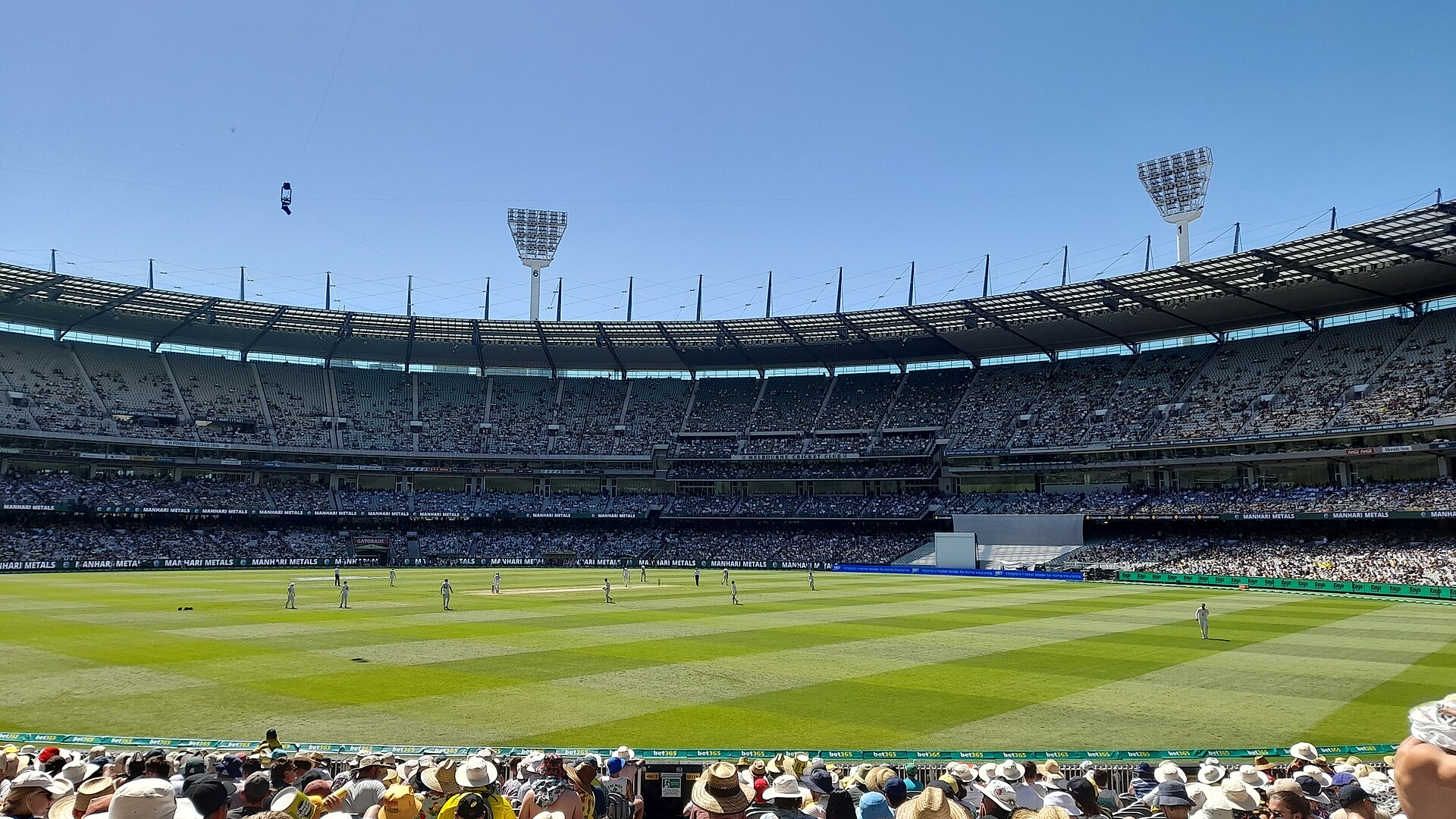

Melbourne's summer has a structure, and cricket supplies most of it. The city shuts down in the week before Christmas and does not fully restart until the end of January. Into that gap the calendar drops a Test match beginning on Boxing Day, a Twenty20 competition running through January, a tennis grand slam in the middle of the month, and, underneath all of it, an ordinary Saturday club competition that has been going since the 1890s. The result is a six week stretch in which there is always a game on and it is always acceptable to have it running in the background.
The institutional history begins in November 1838, when the Melbourne Cricket Club was founded, making it the oldest surviving cricket club in Australia and one of the oldest institutions in Victoria. A match between civilians and the military was played that same month on a paddock in William Street, inside what is now the central grid. The club moved twice before settling in 1853 on the ground beside Yarra Park that it has managed ever since. It is worth being clear that the MCG is not where cricket in Australia began; cricket was played in Sydney decades earlier, and the Melbourne club itself had two earlier homes.
What did begin at the ground is Test cricket. The first Test match, between Australia and England, was played at the Melbourne Cricket Ground in March 1877. The MCG hosted the first intercolonial match in 1856, the Victorian Cricket Association was formed in 1895, and the national board of control followed in 1905. District cricket, the Saturday competition that feeds state teams, was organised around twelve clubs with names that will be familiar from football: Carlton, Collingwood, Richmond and the rest, playing on grounds such as Princes Park and Albert Park that are still in use.
The Boxing Day Test is younger than it looks
Nothing in the Melbourne summer feels more like an ancient rite than the Boxing Day Test, and almost nothing in it is old. Big cricket at the MCG over Christmas goes back a long way: Victoria and New South Wales were playing Sheffield Shield matches there at that time of year from the 1860s. But Test cricket starting on Boxing Day was a scheduling decision, first made in 1974 to fit six matches into an Ashes summer. It became the fixed annual arrangement only in 1980, when the Nine Network acquired the broadcast rights and Melbourne set out to secure marquee events. The tradition is roughly as old as colour television coverage, and it exists because of it.
The crowds are genuinely enormous. The 1974 Boxing Day match drew over seventy seven thousand on the first day and more than two hundred and fifty thousand across five days. The 2024 Test against India drew a total attendance of 373,691. Anyone quoting the MCG's all time crowd records, though, should note that they belong to a different stadium. The ground was rebuilt in stages: the Members' Pavilion in the 1920s, the Olympic Stand for the 1956 Games when the MCG was the main Olympic stadium, the Great Southern Stand in 1992 and a northern redevelopment completed for the 2006 Commonwealth Games. Capacity now sits around a hundred thousand, almost all of it seated and most of it covered. The vast standing terrace crowds of the 1930s cannot recur.
Attendance has also become less certain than the mythology allows. The Big Bash League, which plays at the MCG and at the Docklands stadium through January, competes directly for the same audience, and the number of days on which a Test at the MCG draws a genuinely large crowd has narrowed. The first two days are still an event. The fourth day is often a very large ground with a modest crowd in it.
What the summer actually sounds like
The rhythm is domestic more than it is stadium based. Most Melburnians experience the cricket summer as a soundscape: radio commentary from a kitchen, television with the sound low, the score checked on a phone between other things. The match is long enough that it does not demand attention, which is precisely why it works as background to a shutdown period when nobody is quite at work and nobody is quite on holiday.
Around it sits an unusually dense sporting calendar. The Australian Open tennis takes over Melbourne Park, immediately east of the cricket ground across Yarra Park, for a fortnight from mid January. District cricket runs on Saturdays at suburban grounds. Beach cricket happens on the bay at Elwood, Brighton and Mordialloc, and backyard and street cricket happens everywhere, with local rules about the fence and the neighbours that are treated with more seriousness than the laws of the game.
The city is well set up for this because of decisions made long before anyone thought about broadcast rights. Melbourne's flat ground and the large Crown reservations made in the 1840s and 1850s left an unusual quantity of open space close to the centre, which meant grounds could be built where people already lived. Suburban clubs formed around those grounds, and the identification between a club and a place became the organising principle of Melbourne sport. Money from gold and from the racing industry paid for the grandstands. Newspapers, and later radio and television, supplied the audience.
Weather, which is never incidental
The one thing that can dismantle the whole arrangement is a cold front. Melbourne sits where hot air pulled down from the interior meets fronts arriving off the Southern Ocean, which produces the famous swing of twenty degrees in an afternoon. A Boxing Day Test can begin at thirty six degrees and finish under a jumper, and rain interruptions are common enough that the schedule allows for them. Melbourne receives around six hundred millimetres of rain a year, less than Sydney or Brisbane, but spread across roughly a hundred and forty days, and it has fewer clear days than any other Australian capital. The showers are short and frequent, which is worse for cricket than a proper downpour would be.
Underneath all of it, and older than all of it, the ground sits on Wurundjeri Woi Wurrung country beside the Birrarung, and Yarra Park still holds river red gums that were standing long before the first paddock match in William Street. That is not a footnote to the summer. It is the ground the summer happens on.
References
- eMelbourne, The Encyclopedia of Melbourne OnlineCricket
- eMelbourne, The Encyclopedia of Melbourne OnlineMelbourne Cricket Ground
- eMelbourne, The Encyclopedia of Melbourne OnlineMelbourne Cricket Club
- WikipediaBoxing Day Test match
- WikipediaClimate of Melbourne
This is a reference article, written from the sources above. It is background, not news reporting.